-
Don’t go around in circles
Car-free-dom means that when you head out walking – which we do a lot into the Peak Districk, UK – you don’t have to return to where you started. I mentioned these car-free point-to-point possibilities in a post a while back.
By point-to-point I mean simply that you can start a walk somewhere, i.e where your bus or train stopped, and finish it somewhere else. i.e. where another bus or train stops. It sounds a simple possibility but it is surprising how much more of an adventure it is than walking a circular route back to where you started.
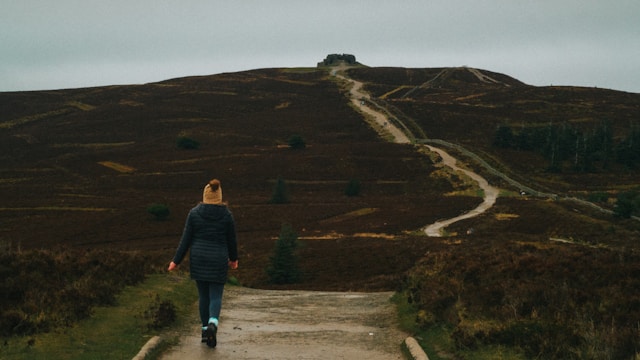
Photo by John Holden on Unsplash It is fair to say that getting into the Peak Districk – our nearest zone for walking – we are not overly blessed with transport options. There are a few hourly, or worst, bus routes, and a few train stations also with hourly-ish services.
With those public travel options we have experimented with loads of different point-to-point walks – many of them really stunning little advertures. It does take some planning and orientation to figure out what might work, but we have found it really rewarding.
So go on, in your (quest for) car-free-dom, get out there! Why go around in circles when you can have a point-to-point adventure?
-
Do fold
In this post I wanted to mention one of the most crucial bits of kit that could really help out your car-free-dom. And, no it’s not headphones, that was my last post!
I have previously written about the cycling aspect of being a car-free-family. And this post is about a particular type of bike – a folding one – which is one of a myriad of possible biking options.
With car-free-dom you do need to mix up travel options and combinations at times to get to where you need to go – bit of bus, bit of a walk, bit of train etc. And a folding bike means that you can take it with you at each stage.

Photo by Rex Lovic on Unsplash Once you’ve figured out the vaguaries of unfolding – I did make sure I practised it quite a bit as I didn’t want to look like an imbecile trying to figure it out in the railway station (!) – then it feels really good to get off a train and jump straight onto your bike.
There are some possible drawbacks with folding bikes though. Firstly, they can be pretty heavy to carry around even for a short distance, and particularly if there are some stairs to navigate. The lightest ones can be really pricey, but might be a great investment.
Secondly, as a folding bike can be a bit pricey if you do get one – mine was second hand – you need to make sure somebody else doesn’t wander off with it i.e. locking it to something on a train when you need to leave it somewhere is a good call.
Thirdly, folding bikes don’t often have many gears and have small wheels so if you are going somewhere hilly it can be a challenging cycle!
That written, with those drawbacks in mind, a folding bike can be a cracking addition to moving around in your car-free-dom. So if you are working then using a cycle-to-work scheme like the one in the UK to buy one could be a great option.
-
Are you listening?
I have previously written about how being car-free out-in-the-world means that you can feel a lot more connected with life than from behind a windscreen in your own private metal box. But of course there can be some downsides to being so in-touch, or in this case in-ear-shot of others.
Recently on a train there was no getting away from a conversation which I was not hoping to be part of. I mean I was not part of the conversation, but the volume level of the conversation meant that I, and my fellow passengers, were inescapably involved!
Luckily I had a pair of headphones and some music to listen to. So there I was on the train, with some delightfully vocal other passengers(!), able take my hearing elsewhere. Phew!

Photo by C D-X on Unsplash Car-free-dom is a delight, but it is a good idea to pack some headphones for those moments when others lives can overflow in ways that you would ideally avoid.
-
Money back
In an ideal world your train runs on time. As I have written about before a missed connection can be as much opportunity as challenge. But it is nice to get where you are going on time.
Heading back from a trip to parents recently things were going very well with our train travel. Connection through London made including a quick stop for some cold beer and snacks for the second stage.
Then it happened. The train slowed down and we stopped. We were graced with a very communicative train manager about the situation which was really helpful – as when you have no idea what is happening that doesn’t help.
The problem was about an issue with a train ahead. Unfortunately it was not a quick fix. When the little bottles of water come out due to a delay you know you are in trouble!
Technical problems on the train network are inevitable. Although of course more investment in the railways would help. As would less wasting money on major vanity projects like H2S.
The upside of a delay is that you can apply for a refund. When it is over an hour you can get all your money back. After navigating the refund process – give yourself some time and take some deep breaths – we got a complete refund for our trip.
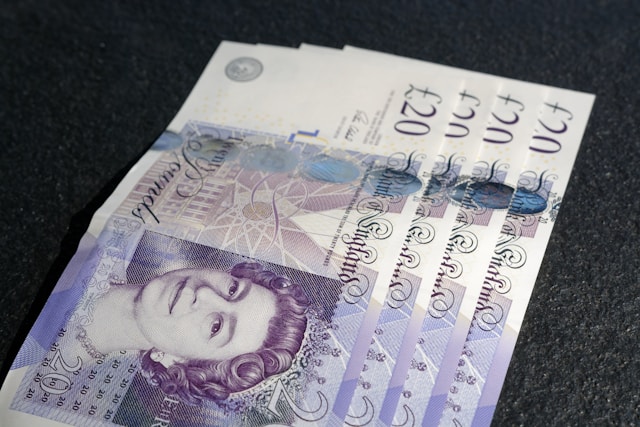
Photo by Colin Watts on Unsplash A free ride is not a bad outcome in support of our car-free-dom. But more investment in the rail network so that things run more smoothly would be an even better outcome.
-
Being on time
One the things you need to be for public transport – bus, train etc. – is on time. Unless of course whatever public transport you are trying to get is not on time. But, let’s assume that it often is.
When we head out on a weekend to go walking in the Peak District the bus or train options that we can take are not so frequent. One-an-hour is not untypical. So that means missing the transport you were hoping to catch has the likely consequence that you’re going to be waiting for a while to get the next one.
This situation on the positive-side means that you need to get-up and get-out of the house so you can sqeeze the most out of the weekend. On the negative-side it can make you feel a bit under-pressure when you are likely wanting as relaxing a weekend as possible.

Photo by Jo Amos on Unsplash The trick is to not get too tense about it – leaving on time. Of course it is ideal you make your originally planned rendezvous with your transport. But, and especially with kids, it is not worth having a family fallout over it.
In the end there will be another bus or train and as I’ve written about before the unplanned coffee, or whatever that you end up doing whilst waiting for the next one, could be a bit of an expected bonus.
Car-free-dom can pose its challenges, especially if your public transport system is not as good and frequent as it could be. But the potential that public transport offers (for example, not having to do a walk that starts and ends at your car!) is significant. Also, the extra impetus it can give you to get out of bed and into the great outdoors on the weekend can only be a good thing!
-
Lost en-route
I have previously written about how cycling is an important part of our car-free-dom. As well as how ‘mediative biking’ is part of my attempts to try to stay calm in facing the inevitable motor vehicle traffic when peddling around.
One way of trying to get away from the traffic is to focus your cycling on the UK’s National Cycle Network – which “is a UK-wide network of signed paths and routes for walking, wheeling, cycling and exploring outdoors”.
Don’t get me wrong the National Cycle Network is a fantastic initiative. However, from the very beginning I understand that it has been a fight for those trying to develop it. It was initated by a voluntary group in Bristol wanting to turn a disused railway line into a cycling and walking route.
I think the story goes that the Bristol group got the money from Clarks (the shoe shop) to pay for surfacing the disused railway line by convincing them it was worth it as if people walked more they would need to buy more shoes!
The network has significantly developed from those days. With proper investment it could be an incredible network. Unfortunately it struggles for government money – which appears to be a trickle rather than a flood, although maybe that is looking up a bit lately – despite all the health and wellbeing benefits that it would offer to everybody.
Definitely do go and find your nearest cycle route. We have found some of it is wonderful dedicated space for cycling away from motor vehicles. However, other parts are less good – and can be very challenging to follow and work out how it fits together.
Maybe we are not so good at following the signs. But my main advice is when you go out to explore the network be prepared to be patient if you get lost or lose you way. Enjoy the car-free-dom it can offer!
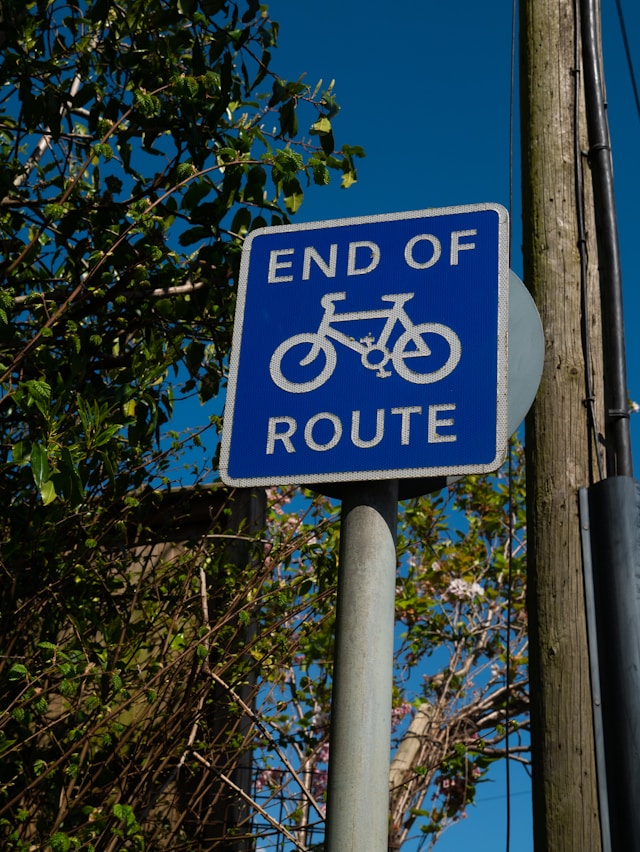
Photo by Matt Seymour on Unsplash -
Watch out little ones!
It’s spring and that means new life. Over the weekend we returned from an evening out to find three fox cubs exploring the road outside our home. We’ve not see fox cubs before – they looked like they might be on their first outing as they were so little.

Photo by Cindie Hansen on Unsplash We live in the middle of a city and have seen foxes around, particularly if we have been up very early in the morning. But to see the little ones exploring their surrounds was fantastic! Every night now we are looking out for them.
In an urban setting there is one predator of particular concern to the fox cubs. In a city they are safe from the still continuing, despite being illegal, horrendous fox hunting, but there is of course one significant threat – cars and other vehicles.
A recent podcast explored whether we can understand cars to be an apex predator based on the animal deaths they cause. From the podcast blurb refering to cars it says: “Nothing will eat them, leaving them free to wreak carnage on more vulnerable creatures.”.
The podcast is an interesting listen. We can only hope that the little foxes get a quick idea of how to listen for, and get out of the way of, any potential car danger. Being a car-free-family fortunately we don’t need to worry the killing capacities of any motor vehicle that we own.
-
Waiting for the tectonic plates to move
There is a very funny comedy panel programme in the UK which has been going for years – ‘Would I lie to you?’. In one episode David Mitchell, one of the two team captains, was quizzed about his lack of ability to drive a car.
David was asked by one of the panel members, who was reflecting on David’s lack of car-driving ability – ‘But how do you get around?’. David wittily quipped – ‘I just wait for the tectonic plates to move!’.

Photo by Johannes Plenio on Unsplash David’s response was very much that a stupid question deserves a stupid answer. We laughed a lot – it was such a beautiful retort. I have vowed to use it myself at the right moment.
As I have explored before in this blog the idea that you might be able to exist without a car is unimaginable to many. Although many people are car-free. In the UK the percentage of car-free households has risen to 22% in 2023.
For those of us who are enjoying are car-free-dom – stay strong! And do use the tectonic plates quip when you can! For those of us who are seeking car-free-dom – go for it and embrace new earthly movements!
-
Missed connection
We went away over for a family break the Easter holidays and took the train – as we normally do when heading out of town. I have previously written about the challenges of train ticket booking in the UK – this time it was a different challenge, or was it an opportunity?
We were heading across the UK rather than down or up. On the train, based on how the rail network is put together, in England mainly centred around London and Birmingham, it tends to be easier to go down or up i.e. south or north.
So going across, i.e. east to west, we needed to make a few connections. Which is fine is you are on time and you make them, or the trains are so frequent it does not matter is you miss them. In our case we missed one and the trains were not very frequent at all.

Photo by Chris Yang on Unsplash So it took a bit longer to get where we were going. We were a bit annoyed I can’t deny – it’s hard not to be. Particularly as we missed our connection by a few seconds . But we were not in such a rush and really there is very little you can do about it if your train is running late.
If you have some time to wait for another train you can get a drink (possibly something alcholic – well you’re not driving!), go find a bench in the sunshine or find something tasty to eat.
On this occasion it wasn’t alcohol – it has been in the past, in the UK bigger train stations do tend to have a nearby pub – but we did find a bench in the sun and located some very tasty pastries to munch (albeit a bit of shock in terms of their price!).
All told our missed connection was not a disaster – it can be an opportunity for something fun and unexpected – at the end of the day it is not your fault. Ideally of course the trains would run on time. And just think you could be sat in a traffic jam – there’s more freedom with car-free-dom!
-
Duped?
Being car-free I spend a good amount of time walking around near roads – you know just getting to the shops etc. At times I watch the drivers – I find it quite fascinating.
Besides getting generally annoyed about being unable to avoid the associated car noise and smell, and having to wait for a lack of cars to be able to cross a road – I sometimes find myself feeling sad for the drivers, and if they have them, they often don’t, their passengers.
When I most notice people in their cars is when their metal box on wheels is not moving. In the UK traffic jams happen alot – it is estimated that an average driver in their life time spends 8 months stuck in traffic and 2 months searching for parking spaces.
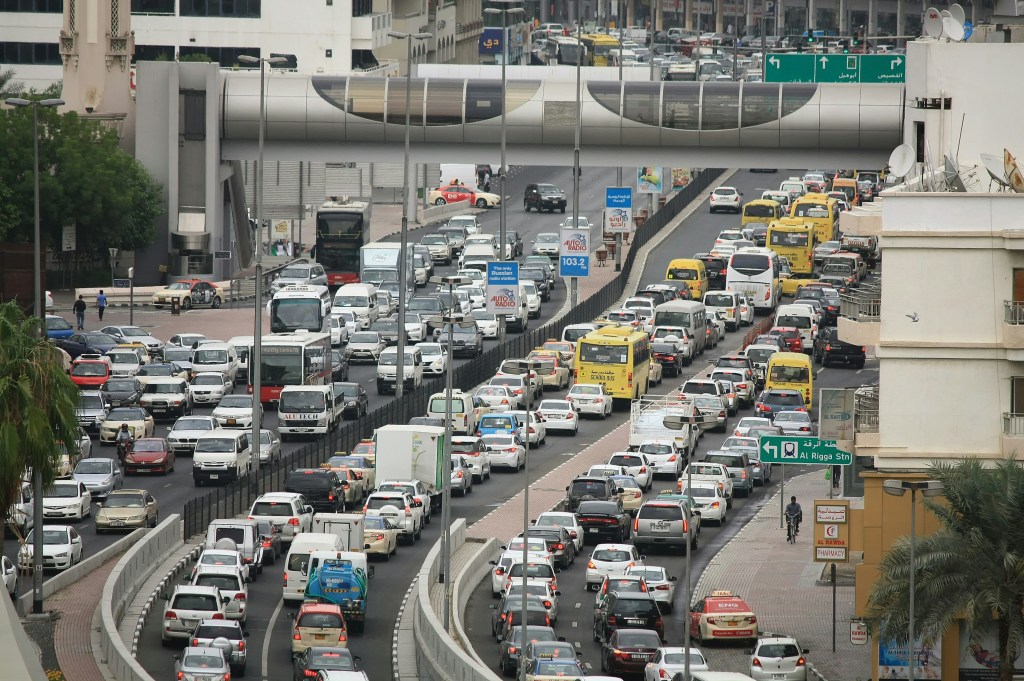
Photo by shun idota on Unsplash I wonder if the drivers feel duped by all those car companies’ ads that told them how wonderful and liberating life behind a wheel and windscreen will be. From the pavement looking in on the people in their cars the reality looks pretty miserable.
For some people of course driving a car to get to work or for something else essential might be the only option. But for many car travel is unnecessary. In the UK around 49% of trips in towns and cities under 5 miles were made by car in 2021, with around a quarter of all car trips in England less than 2 miles.
I think it was in The Hitchhiker’s Guide to the Galaxy that upon arrival to Earth one of the alien characters assumed that cars were the dominant life form. I realise how unfortunately woven into modern living cars have been made to become, but surely it’s time for many more of us to be un-duped and find our car-free-dom.
-
Car-free quiz
In the last post I was mentioning the great opportunity in car-free-dom to play card and board games on the train. On that theme – who doesn’t like a quiz when they are travelling around car-free for having a bit of fun?
OK, so if you don’t enjoy a quiz this is the time to check-out a different blog post – maybe on some interesting car-free related podcasts, ‘meditative biking’ or enjoying bird song. If you do like a quiz then here we go. The answers are at the end of the post below the image – good luck!
Questions:
- What percentage of households in the England are car-free – 12%, 22% or 32%?
- Which country has the largest share of regular cyclists who use their bikes at least once a week?
- In the UK how many tonnes of greenhouse gas emissions are saved every year by walking and cycling – 5’000 tonnes, 50’000 tonnes or 500’000 tonnes)? [NB – 1 tonne is equivalent to driving a petrol/gasoline car for 5,000 miles]
- How many kilometres of cycling lanes are there in the Netherlands – 12’000km, 22’000km or 32’000km?
- How many miles of public rights of way (including footpaths, bridleways and byways) are there in England and Wales – 40’000, 140’000 or 240’000?
- How many billion kilometres were travelled in Great Britain by cycle in 2020 – 1, 5 or 9?
- What is the highest speed that Eurostar trains can travel at – 220km/h, 280km/h or 320km/h?
- How much would a single train ticket from Sheffield to London cost if you bought it just before you boarded the train – £50, £100 or £150?
- Which European country offers free public transport nationwide?
- How many kilometres was the longest unbroken walk ever recorded – 10’000km, 20’000km or 30’000km?

Photo by Towfiqu barbhuiya on Unsplash Answers:
-
Train games
I have written a few times about train travelling being important in our car-free-dom. This has included about the need to book in advance, the unintended benefits of any delays, getting your money back if things really don’t go very well, and recommending to book seats.
Another great thing about being on the train is the ability to play games, particularly card games. Sure you might play on a phone or device, but we tend to take some card or even board games with us.

Photo by Marin Tulard on Unsplash Having a table to play on is really handy – which sometimes is not possible but you can try to book one. So you can sit back, play and relax and enjoy the ride!
Freed of the stresses and strains of attempting to get somewhere in a car – enjoy chilling out on the train with your friends or family with some games in your car-free-dom. Just try not to get too stressed about winning!
-
Once upon a sit-upon
I’ve mentioned a few bits of really handy car-free-dom kit on this blog. It has included sticks/poles, shoe ice grips and comfy shoes to name a few.
We really enjoy walking for leisure, or hiking as it’s often called. When we are out for a wander, often on a decent walk/hike in our nearby Peak District we love a picnic.

Photo by Ctrl Studio on Unsplash If you are walking/hiking quite a few miles/kilometres and want to have a decent feed en-route but don’t want to lug too much stuff around you need to keep your picnic gubbins to a minimum. We’ve come up with a light comfy option for sitting on.
OK the sit-upons that we made from cutting up an old yoga mat into 30cm squares for us each to sit on when we picnic are not so innovative but they do the job really well. Very cheap as we found the yoga mat in a local charity shop. And, they can double as good back cushioning if you put them into the right spot of your backpack.
So there go when you are out walking/hiking in your car-free-dom don’t have an un-comfy picnic – make and take some sit-upons!
-
A dilemma
We live in a city in the UK – Sheffield. It is fairly hilly city for the UK. Although in other parts of the world I imagine it would be regarded as quite flat.
The thing with hills is that they create daily dilemmas in our car-free-dom for how to move around. But why I hear you ask? Well the main reason is that going up hill makes your body work harder – which is a great feeling – but does mean you sweat.
What this means is that the choice of walking or cycling – or possibly public transport – to get around does involve the dilemma of sweat versus speed. Although with the steepness of some of the streets walking up then is not so much slower than cycling them.
Our house is quite well up one of Sheffield’s hills so you know that if you have cycled when you get back home you are going to need a shower. This is all fine of course but it does mean that you need to think about whether whatever you are doing is more in need of speed or not being sweaty.
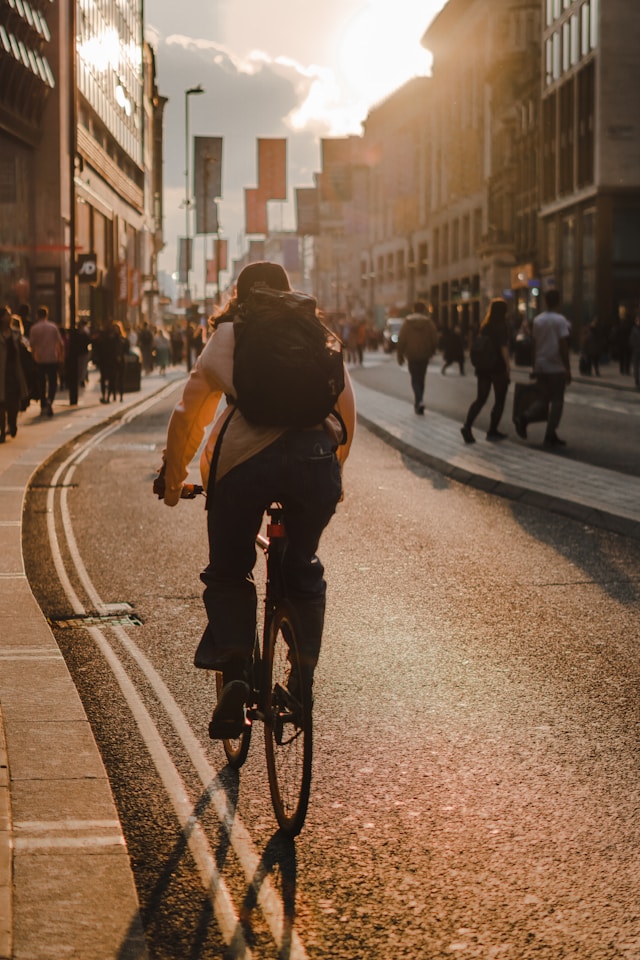
Photo by Jack Lucas Smith on Unsplash On many occasions I do choose to walk as unless I need to go a more than a couple of miles walking is often more straightforward. When I add in getting my bike out, using my panniers instead of my normal bag, plus the possible need for change of t-shirt on arrival – walking often wins.
It’s a nice dilemma to have in car-free-dom – walking or cycling – without the hills cycling would definitely be a more frequent choice. There is of course the possible e-bike option but that’s a whole other dilemma to consider.
-
Stick to it
In our family car-free-dom we really enjoy walking and hiking. I have mentioned that once, twice or even three times before on this blog!
One bit of kit that I was always a little uncertain about was the benefit of walking / hiking sticks. I know it sounds like you are getting a bit old when you start talking about sticks!
The walking sticks, or poles, that I am talking about are not so much about helping you getting to the shops in your older age, but more about giving you more power and stability when going up and down hills.
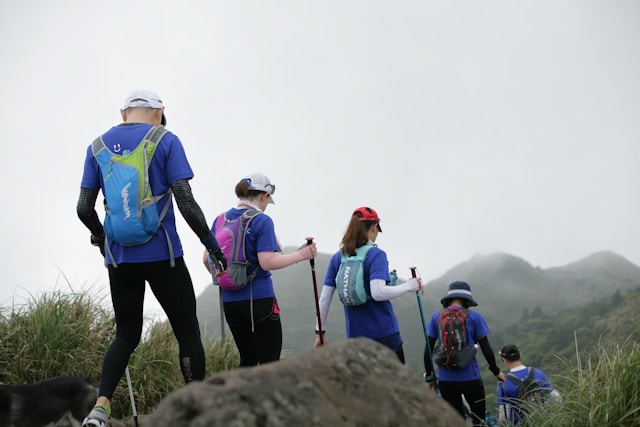
Photo by MChe Lee on Unsplash I don’t want to make walking / hiking all about kit – because it really isn’t – but like some comfy boots some stuff can really make things more enjoyable. And, I am bit of a walking stick/pole convert.
Going up hill your two sticks get your upper body into the action and going down they help to stop you coming a cropper and protect your knees and hips from some of the worst of the impacts. And, on the flat getting your arms involved can really help to power things along.
All I am suggesting is that walking poles / sticks could be for you, but if you are into Nordic Walking you likely knew that already. So in support of your car-free-dom you might to check out the potential benefits of sticks!
-
Clean boots
In my car-free-dom I do think about my feet quite a lot. Well you need to look after them as they are crucial to getting around!
Previously I have blogged about the dilemmas of findings comfy shoes as well as some ways to help to avoid getting sore feet. One thing you can do that can really help to keep your feet in good shape (declaimer – I am not a podiatrist!) is when you find good shoes or boots look after them.
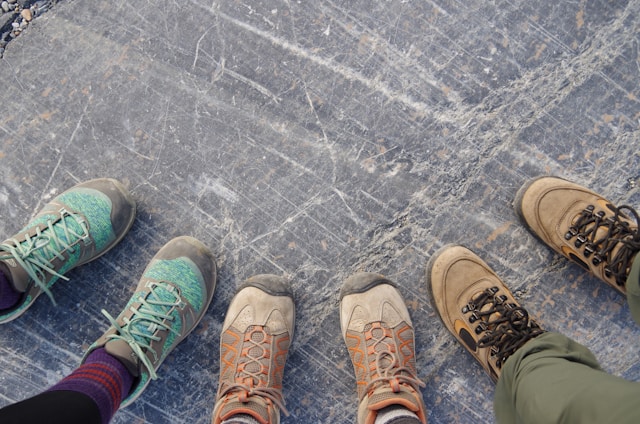
Photo by Emma Van Sant on Unsplash For going walking all year round a good pair of comfy walking/hiking boots is key. There are no easy ways to find your perfect boot – as from experience the perfect boot does not exist! But when you do find a good pair of boots you want to keep them going for as long as possible.
It might not feel so exciting but cleaning your boots should make a big difference to their life. If your boots are synthetic getting the mud off helps stop the fabric degrading too quickly. Or, if they are leather cleaning and waxing will stop them drying out and cracking at any early age.
If you’re back from a decent walk / hike it might feel like the last thing you want to do is give your boots a bit of a clean. I can rarely manage it, but within a day or so of wearing them just take that five minutes to clean up your boots.
So there you have it – for keeping your car-free-dom – take a bit of time to look after your boots and you should be helping your feet so they can keep you car-free in getting from A-to-B!
-
A bit cross
In the UK about four years back the Highway Code was amended. An aspect of the changes was about clarifying a ‘hierarchy of road users’. This hierarchy “places those road users most at risk in the event of a collision at the top of the hierarchy” – which was/is encouraging.
How well you find people respecting this hierarchy can be, shall we say, ‘mixed’ at times. In particular, that “when people are crossing or waiting to cross at a junction, other traffic should give way” has not quite permeated into the minds of all motorists.
Going back to my last post, that as a motor vehicle driver you are having to give way to somebody not in a motor vehicle can be a hard habit or routine to break! Which means that despite such rule changes as a pedestrian, cyclist, wheeler, horse rider etc. as a road user most risk you do really need to keep your wits about you.
With crossings I prefer those with the lowest amount of possible ambiguity as to what is happening and who has priority. I do always feel a bit wobbly with zebra crossings as although as a pedestrian you have priority you never quite know if the vehicle drivers you face are in agreement.
My crossing preference is a pelican crossing because you press the button – ok you do have to wait (sometimes for far too long) – and you then have the lights to back up your pedestrian version of reality that it really is your right of way when they are red for motorists.
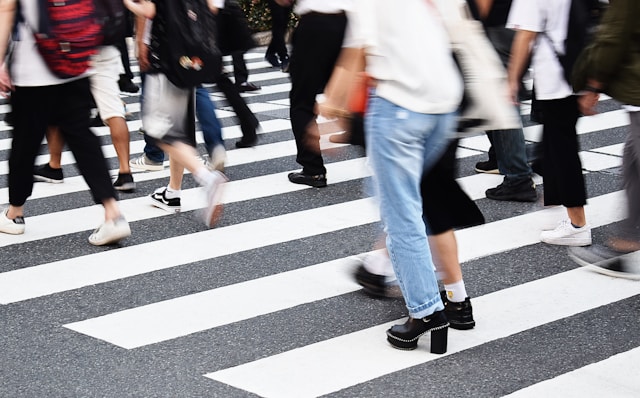
Photo by Chris Barbalis on Unsplash So very definately do enjoy your car-free-dom, but when you are out and about please do keep a eye out for people that might not be so up to speed as you are on the ins-and-outs of who has road priority.
-
Who doesn’t love a cycle lane?
A recurrent theme in these blogs (such as) about car-free-dom is a general idea about there being an unquestioned acceptance of the (growing) presence of motorised transport in our lives with a connected bias to not judging motorised transport “objectively and dispassionately”.
I don’t want to not get too language heavy in this blog. But basically the main sense is that it is suggested that many peoples’ taken-for-granted attachment to their vehicles means they view alternatives that are car-free negatively, with the potential for negative emotional responses.
Car-free-dom can be felt as significantly challenging to their car identity and so can inform people feeling a strong need to resist them. In this case I am thinking about some peoples’ reaction to the (potential) creation of cycle lanes to enable everybody to be able to actively, safely and cleanly travel around where they live.
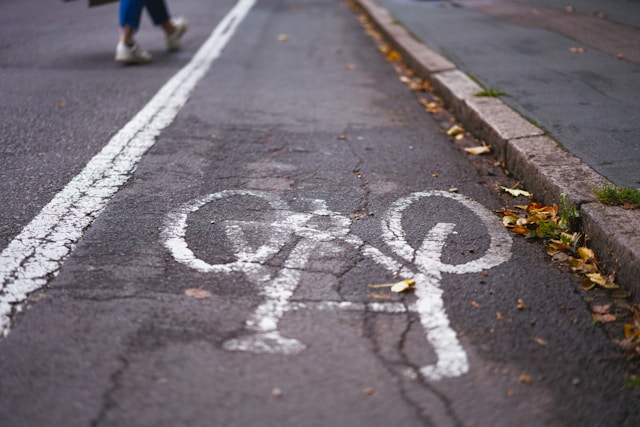
Photo by Phil Hearing on Unsplash Although it seems that this opposition can be over-hyped as recent research suggested that:
What this implies is that whilst in promoting car-free family living we need to understand how we can face motonormativity, but that the sum of the social media noise is in general support for better infrastructure for car-free-dom. So that’s good to hear!
-
Bit of a bonus
As I have mentioned more than one or two times before in our family car-free-dom we often get the train around the UK. Given the money we save from not owning a car – we probably go away for trips more than most.
Not so long ago as normal we got the train for a bit of an off-grid retreat for a few days. It was in a great little ‘shepherds hut’ on a farm in Shropshire – nice and basic but with lots of insulation and a log burner it was super cosy.
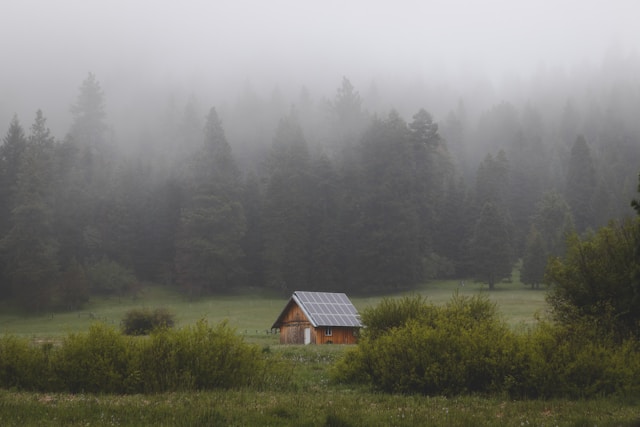
Photo by Alex Bierwagen on Unsplash On this occasion there was an added bonus for our car-free-dom. The company that we booked through wants to encourage people to get to the holiday places they promote via public transport.
Very impressively Canopy and Stars are trying to take responsibility for reducing the carbon emissions of how people travel to the holiday places on their website. As part of this they rewarded our train travel with a £75 voucher via their sustainable travel policy.
What a bonus! So with that incentive we are heading off-grid again soon. The joys of car-free-dom!
-
We would have missed it
When we are out and about in our car-free-dom we often see and hear wildlife. A few weeks ago we went away for the weekend – as usual we took the train. It wasn’t far – a direct train for two hours. It’s always good a Friday trip away with a drink or two on the train and some snacks to shift into a weekend gear.
For this trip we were heading to the North East coast of England to do some birding – i.e. bird watching – at Bempton Cliffs Nature Reserve. Mostly the weather was not so great but we had a cracking weekend of spots of the feathered variety as well as dolphins, porpoises and seals.
On the Saturday evening as we were walking back from the nature reserve heading for the train station we had one of our best spots.
Barn owls are a challenge to spot as they are typically night hunters but if the weather has been poor i.e. wet and windy – they need calm conditions to be at their most effective hunting – then you can sometimes see them in the day time.

Photo by Bob Brewer on Unsplash Walking back to the train station we saw one of these fabulous birds out hunting. It was out cruising around looking for a meal. We had not seen a barn owl for ages and so it was a massive treat to see this one.
Had we been chugging along down the road in a car we would not have seen the barn owl. As I have written about before you miss a lot in a car – life behind a windscreen/windshield dulls your sense of connection to the places that you are travelling through and between. So hears to a car-free life where you can enjoy the best of our world.
-
Running on time
A main bus route for us to head out of Sheffield into the Peak District for walking/hiking over recent years has been the 257 bus. I have previously written about the challenges of when a bus doesn’t show and the need for back-up travel options or a cosy cafe or pub to hand.
Last year the company that was operating the 257 bus route went bankrupt. Hulleys, the now defunct bus operator, were not renowned for their ability to run their buses on time (a blog post about the life and death of Hulleys can be found here). In our experience they were at least 15 minutes late on a good day and sometimes decided not to turn up!
My upset with Hulleys poor service had over time meant I have sent them and our regional mayor a range of emails asking what was going on and why our bus did show up. We did not cry the day Hulleys died, but we did wonder what was going to replace them running the 257 route.
Nearly a year on and we have had quite a few experiences with the 257 – now run by Andrews. The news on that front is good. Only this weekend we got yet another 257 that was running bang on time.
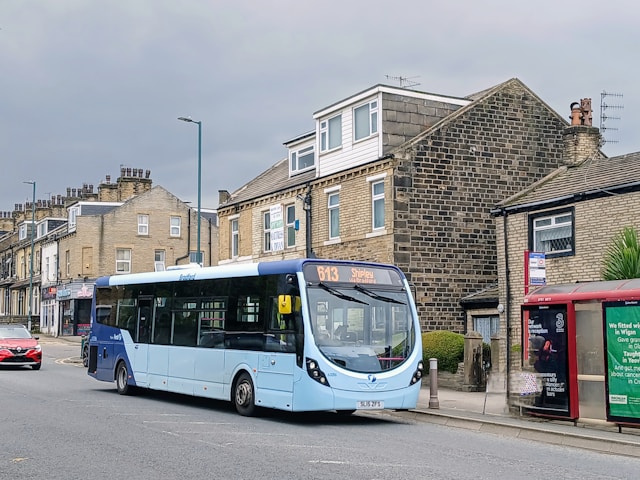
Photo by Joseph Mama on Unsplash It does not seem much to ask to have a reliable bus service – but they can be elusive. In our family car-free-dom a 257 bus that it is working well is very helpful in support of some fantastic point-to-point walking/hiking. I may now have jinxed it, but Andrews – we salute you!
-
Non-slip
It’s that time of year when you get snow and ice where we live in Sheffield in the north of England. As I mentioned before in car-free-dom it’s great to wrap up warm and get out and enjoy the winter weather.
If you are on foot and it is icy then you don’t want to fall over and hurt yourself. Particularly where we are in a hilly city it can be very tricky at times to stay on your feet.
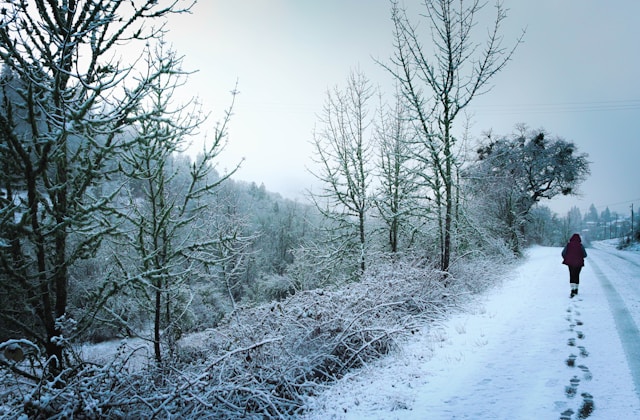
Photo by David J. Boozer on Unsplash A great thing we discovered a few years back are ice grips to attach to your shoes when it is icy. I’m not on a sales commission here – but ice grips (ice cleats or ice grippers) we have found to be pretty essential.
Sticking on your ice grips when the conditions are not great gives us confidence that we’re not about to slip and land on our bums. The grips we have are not expensive, and you do see quite a few people wearing them around here, but it does amaze me that many people don’t bother and slip and slide around the place.
So if you are looking for a bit of help to get around in your car-free-dom in some of the worst winter conditions track down a pair of ice grips so you can confidently stay on your feet and enjoy all-weather walking.
-
Let it snow..
It is the time of year we get snow in Sheffield in the north of England. It is a hilly city so the arrival of snow, and ice, for moving around can making things challenging.
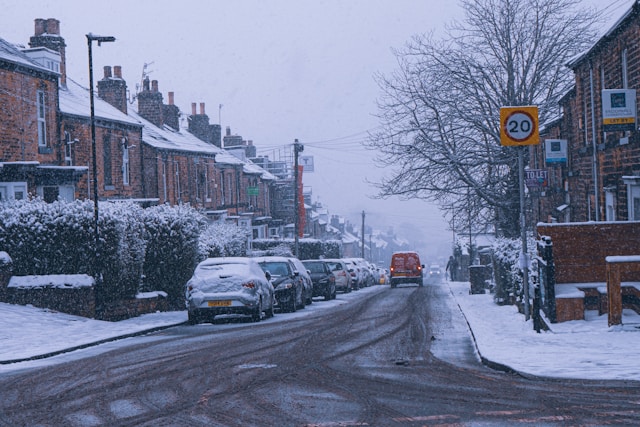
Photo by BEN ELLIOTT on Unsplash We don’t tend to get loads of snow like many places in the world – and some years we don’t get any. Which means that we are prepared for it in a fairly minimal way in terms of keeping pavements and roads navigable when the snow and ice arrives.
When weather comes you have to deal with it and the challenges to getting on with living and moving that it can create. Responding to the weather can be, and often is, really enjoyable as you are engaging with the variety that the different seasons bring.
Ideally when things are icy and snowy it makes sense to avoid having to move around the city unless you absolutely have to. Particularly when the snow and/or ice have just arrived and it is not so clear how bad things are going to be under-foot.
It does always amaze us how keen some people are to, whatever the snow and ice conditions, jump in their car and try to head out. We often see them slipping and sliding around in their car on the hilly streets from our windows. It’s kind of funny but then of course they can do damage to others and themselves.
In our car-free-dom we don’t have those compulsions to head out in a car in all weather conditions. Because we get around not detached from the world in a metal box on wheels we viscerally feel the weather.
If you are properly out-in-it you can’t really ignore the challenges that snow and ice and present to moving our body around. So being car-free means you are more aware of what different weather means and so can respond accordingly.
Of course once you’ve got the measure of the conditions go and enjoy the different weather that comes. But it is much more fun doing that freed from the confines of a car which dulls all your senses of the world around you and leaves you slipping and slidding out of control.
-
God’s gift to nature!
Over Christmas I was searching for something to watch on TV for a bit of a chill out on the sofa. Thing is I was not at home, we were at my wife’s mum’s house and her TV is more complicated than ours. It’s one of those arrangements where the TV provider, in this case Sky, show you everything to watch even if it is not available for you to watch!
What this meant was that having spent some time refining my search the programme that I decided upon was not in fact available to me, nor the second, third etc. – they wanted more money! Argh! Anyway I eventually found a nature programme that I was able to watch.

Photo by Glenn Carstens-Peters on Unsplash As I wrote above I was looking for a chill out – but then before I was able get to the nature programme that I had painstakingly found I was confronted with loads of ads! We normally watch BBC and so avoid them.
So this is where we get to the car-free connection. One ad I had to endure in preparation for the nature programme was a Volvo ad. As I mentioned I am rather sensitive to TV ads as I go out of my way to avoid being told what I need to buy to make me happy and live the good life!
The ad, I am sure their ad people would try to tell me a different story, seemed to be premised on how Volvo’s electric cars are god’s gife to nature and the planet and by driving one you’ll be solving the climate and biodiversity emergencies.
OK electric vehicles (EV) might be better than fossil powered ones, depending on how the electricity you use is generated, but they still have many problems. The mining and often lack of ability to recycle the materials used for their batteries as well as all the particulates they emit when their tyres rub along the road, and any debris they kick up off the road for us to potentially enhale – EVs can tend to heavier than other cars due to the weight of batteries.
Also, car are individualised forms of transport so their general efficiency in moving people around is much less than public transport options that move many people at a time. In sum, I am just pointing out a few questions about EVs sustainablity credentials.
So I gave up – my attempted TV chill out had turned infuriating. I never got to watch any programmes. Instead I ran a bath and relaxed there in all my car-free-dom – away from the EV ads.
-
Impromptu drinks?
I have mentioned before that when travelling by train in our car-free-dom when things go wrong unexpected benefits can emerge. Most notably that it offers an opportunity for an impromptu drink or whatever is on offer nearby your impending or delayed train departure.
The other weekend we were quite fortunate as both times (we were pretty early for a train, and we had a train cancellation) there was a decent pub on the station. Indeed there are actually guides about station pubs, and lists of ‘the 10 best station pubs‘.

Photo by Ambitious Studio* | Rick Barrett on Unsplash A station pub is a real bonus as it turns a bad moment of ‘we are going to have to wait a while for our train’. Into a good moment of ‘let’s enjoy a drink and a packet of crisps’.
It may not always workout that there is a good pub to hand on your train travels when you need it – but when you get a chance go on raise a glass to car-free-dom!
-
Too much information
In our car-free-dom we were out and about on the train at the weekend. I’ve blogged a few times on train travel including – reserving seats, on-board temperature, getting a refund for delays and booking ahead.
Something that can be really useful is live train information to know if things are running on time as well as finding out which platform you are arriving on or leaving from.
The complexities of the UK railways are not only that there lots of different train companies and websites to buy tickets, but also various places for live train information. Like National Rail or Trainline, as well as all the train companies websites.
We have discovered that the information from all these various live train information sources can differ! There was a train issue at the weekend and so we went to get some live information by checking a few sources.

Photo by Daria Nepriakhina 🇺🇦 on Unsplash My preferred source is Realtime Trains which has been generally reliable and if you really want there is a lot of detail available on such as the number of coaches and the signal boxes a train has passed en-route!
Anyway on this occasion there were some signalling issues delaying trains and based on the information on the platform and checking both Realtime Trains and National Rail we decided that a train was not coming for a while. So as I have mentioned before about the opportunties that being car-free offers we went for an impromptu beer in the station pub.
The issue was in the station pub there was a display with train information which contradicted everything we had found from our searching – it showed that a train was very soon to arrive. We ignored it – as it was three information sources against one – and ordered a beer. However, the pub train information was proved correct as a train arrived as it had suggested!
After a very quick beer and then jumping on the train we were left to wonder about what live train information to trust! Not a big drama but less train information options and more accuracy would be good for being a car-free-family.
-
Some reservations
Booking train ticket in the UK can be complicated. However, on most train services you can reserve a seat as part of the ticket cost. Some train companies don’t allow seat reservations, for example, I have never been able to reserve a seat on Northern or South Western.
Apart from local trips most of the train trips we take I buy the tickets well in advance and so we’re booked onto a specific train with reserved seats. For example, you can request if you want a seat at a table, or near the window, and also the direction you want to face.
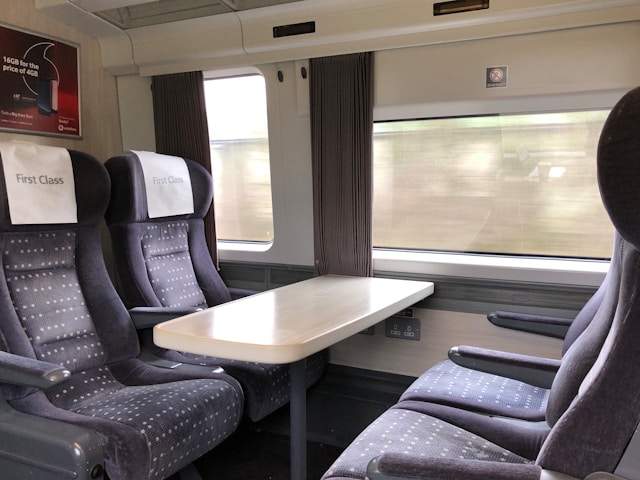
Photo by Andy Pearce on Unsplash In other countries you’ll normally have to pay for a seat reservation (e.g. in Germany on Deutsche Bahn) so it is good that it is free in the UK. But is does surprise me that some people don’t like to reserve train seats.
It is possible that it can be hard to find your reserved seat when you board the train if you get on a coach far away from it. Or, that you feel too shy to ask people to move out of your reserve seat if it is occupied when you find it.
Also, it does happen that technology can get in the way as the IT system on the train which puts the reservation information into the digital display at each seat might not be working properly (i.e. it can’t download and display the right information). That is a pain, but from experience you can show people your ticket and they are happy to move elsewhere.
But even with all those possible challenges it doesn’t cost anything and in our experience almost all of the time you just go and sit in your reserved seat – no problem. So in car-free-dom, particularly as in getting on the train you’ve been walking between other modes of transport, take the weight off and make some reservations.
-
Too hot, too cold
I am a big fan of trains. But as I have written about before, of course, train travel can and does present a few challenges at times. Some challenges can be fixed by sticking on a pair of headphones, taking some quality ‘time-out’ from a missed connection, or by buying tickets well in advance to save money.
One thing that we notice is the variability of the temperature on the trains that we travel on. I am not so much thinking here about some heating technical issue (i.e. something has broken), or when there is the extreme heat that we increasingly experience. But just that some trains can be cooler or hotter than others.
Some trains can be so hot they make you sweat – like in the photo below – and others so cool that you need to layer up. Ideally of course you can sit on your train in a pleasant temperature, but it is a good idea to be prepared if not.

Photo by Nathan Dumlao on Unsplash Being prepared is about being able to de-layer or layer-up if you need to. So, it’s worth just planning ahead in case you don’t get the ideal temperature on your train trip.
As I wrote at the start, I am a big fan of train travel and in our car-free-dom trains are a crucial part of moving around. But as with some of the other challenges that you can experience with train travel it’s always worth a little extra bit of planning to make sure things can be as comfortable as possible.
-
Comfy shoes
I love walking around my locale as I’ve written about before in my car-free-dom, but inevitably you do go through shoes. In the last post I wrote about sore feet, so in this post I am continuing on a similar path (excuse the pun!).
I seem to wear out shoes quite quickly. It is annoying, isn’t it? You find that ultimate comfy pair of shoes that you can trudge around in for hours day-after-day, then, who would have thought it, they are too worn out to continue!
Of course looking after your shoes is important with cleaning, polishing etc and extends their life, but even so they do still wear out.

Photo by Jakob Owens on Unsplash I have taken distressed pairs of shoes to be mended, mainly the soles replaced when they can be, and that of course keeps them going a while longer. However, I have not found a solution to comfy shoes that go on for ages-and-ages.
The combination of a shoe that is comfy, waterproof and hardwearing I have found to be elusive. And, most annoyingly, when you do occasionally find that ultimate shoe following the years of them proving themselves, it is often impossible to find the same ones again.
So car-free-dom, as we know, does have its conundrums. Finding a reliable comfy shoes that lasts is one of them, but for being car-free it does seems a worthwhile challenge to grapple with.
-
Sore feet?
In car-free-dom the good news is that you will be more active because without a car you’ll need to move around more under your own steam. On the flip-side if that moving around involves walking then you may get sore feet.
In many ways having used your body to move around and become tired is great- you feel like you truly deserve that slice of cake! But if your feet do get sore for whatever reason that is not ideal.
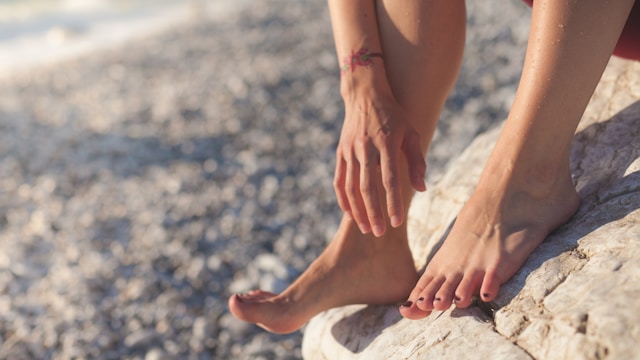
Photo by Jan Romero on Unsplash There is a lot going on in your feet and I am certainly not an anatomy or podiatry expert. Your feet contain 26 bones and 33 joints, and more than one hundred muscles, tendons, and ligaments!
I have found foot massage useful. Again I am no expert on this either – there are plenty of videos and advice out there e.g. here. But, for a few minutes each day using some kind of lotion/oil to rub the tops and bottom of my feet, plus gently pull the toes and push fingers between the toes I have found really helpful for looking after my feet.
The science of massage is not so clear. But, as long as you are not too heavy-handed with your feet when you are massaging then it seems worth a go. Go on, in support of your car-free-dom, give your feet some loving!
-
Tweet tweet
Can you hear the birds sing whilst driving in your car? Well, no, of course not! As I have blogged about before you miss a lot when you are encased in a metal box with windows on wheels.
It is spring time here so the birds are signing which is really soothing. Their songs are a pleasant sound, it’s wonderful to know that winter is passing for another year, and it’s pleasurable and relaxing to hear your nearby bird neighbours singing.
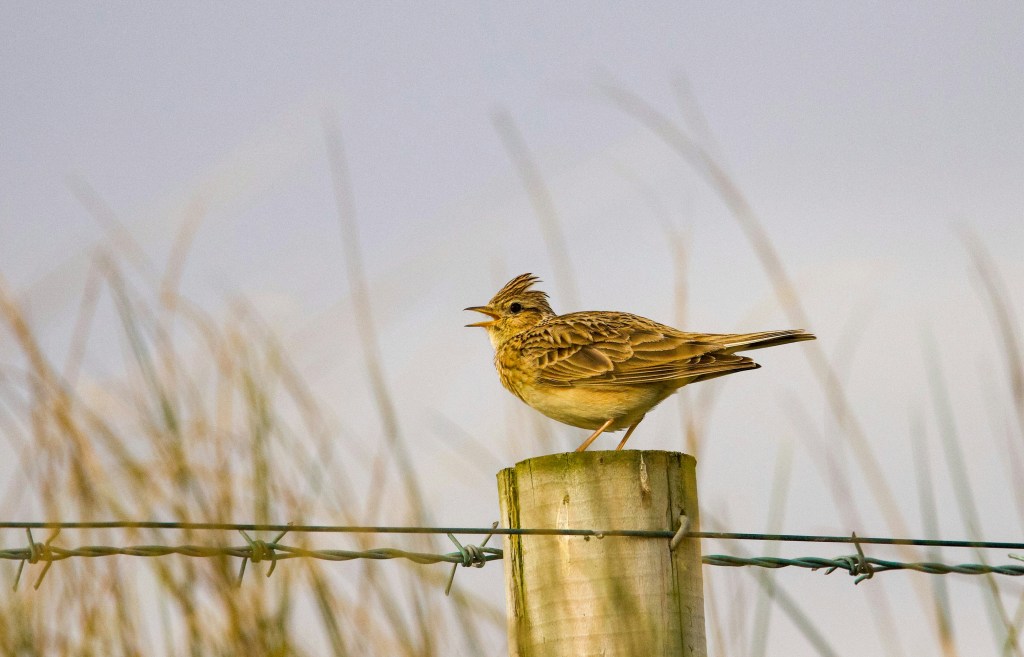
Photo by Heather Wilde on Unsplash Moving around in our car-free-dom – we live in the middle of a city – you can really enjoy the bird song as you walk, wheel or cycle around. As long as there are not too many revving engines nearby! You can hear even more if you venture car-free out of the urban environment.
Recently, I have been spending some time trying to learn their songs, it is fantastic to be able to pick out something like this explosive wren song. The variety of bird songs are not at all easy to learn but well worth it when you can identify a few.
Go on get out there – listen, enjoy and relax! The wonders of car-free-dom.
-
Bit of a shock
Walking in the streets around your house is normal and everyday if you are car-free. You head out of your front door and you walk. OK you might also be wheeling, or cycling, or something along those lines – but in car-free-dom you are often likely going to self-propelling your body around your locale.
Car-free moving around your nearby streets is a taken-for-granted and nothing unexpected way of existing. Although you might get a shock. Last week I had just that when I encountered a nearby neighbour on the street near both our houses.
I was shocked that I was shocked. But I was shocked because I had never before encountered this neighbour, or to be fair many of our nearby neighbours walking on the street, in all the years we’ve lived in our current home.
The encounter seemed so unexpected. If they had been in their garden or crossing the road to get into their car – no shock. It just felt so odd, in a double take kind-of-a-way, that we both met and passed on that bit of pavement.

Photo by Jon Tyson on Unsplash If you have decent pavements and pedestrian crossings etc. – which are crucial for good living – you can feel fortunate as others do not. So I would get the most use out of them possible and maybe you’ll be shocked or shock others – in a nice car-free-dom way of course!
-
Not getting hooked
In some news you read that car ownership by younger people is dropping. Other news suggests that is it generally rising and seen as a more achieveble ‘status enhancing’ purchase than a home. Looking at a fairly recent review of car ownership trends in the UK it is not so clear.
Some people are saying cars are aspirational and a status symbol for many young people particularly those that can’t afford to buy a home – which is most young people! Others suggesting that cars themselves are getting more expensive and so too costly to own. Connected with suggestions that more flexible models for access to use a car based on individual needs are sought.
Of course the best option is being car-free, but it is interesting to consider young peoples’ relations with possible car ownership. The hope is that there is a general trend to avoiding ownership because of improving public transport (yes please!) and more active travel (i.e. walking, cycling and wheeling).

Photo by Jeremy Bishop on Unsplash Inevitably it is going to be a mix in terms of whether young people find their way to embracing or rejecting car ownership, or finding new models in between like car sharing clubs. But it would be great if younger people saw cars increasingly as an impediment to living life well as opposed to being bound-up in some image of being a successful human-being!
-
We don’t need roads..
The title of this blog is that classic quote from the end of the film Back to the Future. In that situation it was about jumping into a time machine which was a flying DeLorean car to travel into the future. Which is not so much what this blog post is about – but it is about not needing roads (for cars).
The road that is not needed if you are living it up in car-free-dom is Snake Pass in the Peak District in the UK. Well I say not needed, but what I mean is not needed for cars, motorbikes etc. to drive on it – but instead needed for cycling and walking.
There was a recent news piece that caught my attention as it suggested that my wish could be granted! The situation with this road that winds through the Peak District between the cities of Sheffield and Manchester is that landslips are making it too expensive to maintain.
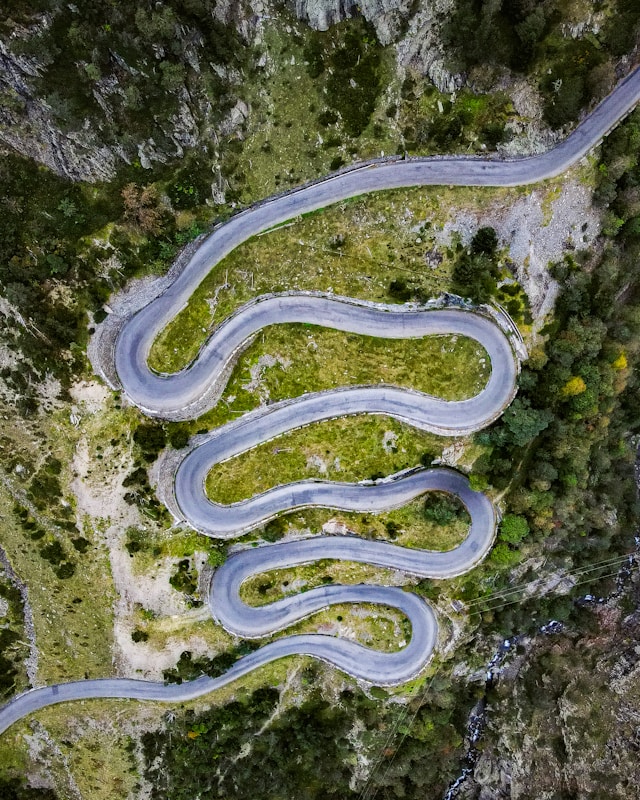
Photo by Sylvain Gllm on Unsplash That photo is not of Snake Pass by-the-way, but I liked it to use here. So a suggestion is that the road could shut to road traffic – although I guess some people who live on it might need to use it – and left for walking and cycling. This sounds wonderful to me!
I read the news piece about Snake Pass after being on a walk near it the weekend before. The noise that comes from vehicles on it – particularly motorbikes – is so sad given how fantastic the scenery is around it in the beautiful Peak District. So the glimmer of a possibility that all the noise could be banished sounded amazing!
We’ll see what happens about Snake Pass in the coming months. But fingers crossed that it could be on its way to a car-free future!
-
12 weeks ahead..
In our car-free-dom we use the train quite frequently. As I have written about before there are many benefits from travelling on public transport not being encased in your private car-box where you just see the world through a windscreen.
The train system in the UK is good at times and less good at others. The less good can be both about relability and comfort. Although when it works and you get a comfy seat it is an excellent way to get around. According to the latest government data you are going to be on time 67.7% of the time and your train cancelled 4.2% of the time.
A major ‘quirk’ of the UK train arrangements is that to get the best ticket prices you can need to book up to 12 weeks in advance. If you have just fallen off your chair at that news – then yes it is pretty mad! However, because it can be considerably cheaper buying in advance then you do really need to plan ahead.
Also, to add to the forward thinking on train ticket buying you also need to navigate the complications of an unending variety of ticket types, the possible cost benefits of split-ticketing, and that you can buy tickets via a seemingly endless number of different train ticket selling companies.

Photo by Mika Baumeister on Unsplash Over the years I feel like I have mastered some of the arts in train ticket buying (when to buy, who to buy from etc.) but it seems a constantly changing landscape so you need to regularly review your approach. Who thought buying a train ticket could be so complicated!
As a regular train ticket booker I know that it is essential that if you don’t want to discourage people from using the trains due to over complicated booking processes, and give visitors to the UK some hope of not get stung on the really expensive last minute train tickets then something surely needs to improve.
There is a new plan by the government to bring all the individual ticketing company websites into one under the lable – Great British Rail. It could be a step forward, let’s see.
-
Car-free walks
About ten years ago when staying in a YHA in the Lake District in the UK I noticed a poster promoting the website called Car Free Walks. Car Free Walks describes itself as “a community-driven outdoor website provid[ing] walks free of cars and free of charge. Every one of our walks can be reached using public transport – bus and train, coach and ferry.”

Photo by Robert Bye on Unsplash Car Free Walks sounded great as we were car-free and liked walking! It some ways the website name can be confusing as of course if you are walking you are not in car. Also, it could suggest that you will be walking in areas that are completely free of cars – which could be the case but unless it’s a remote spot that is unlikely given there are 41.7 million licensed vehicles in the UK to avoid.
As per the blurb on their website the car-free aspect is about getting to the start and back from the end of your walk without a car. This is particularly handy as if you’ve picked up many walking books they will likely make the assumption that you will be using a car – so if you don’t they are useless.
The best aspect of their site is that you can upload your own walks to share with others who want to be walking car-free. I did write a few – it did take a bit of time to type up the description and put the points onto the online map – but I can now look back and see that some people have had a go at, and enjoyed, our car-free walks.
Maybe this way of sharing things is now seen as a little ‘old school‘, with people into GPS tracking apps like Strava, but I would recommend it to share great walks. Anyway blogging like this is probably seen as ‘old school‘ as well – trying to steer clear the virtual bear pit that is often social media – but given how ancient and essential car-free walking is being a bit old school works for me!
-
Why so radical?
In many ways being car-free is not very radical. In the UK 22% of households are without a car. So with 28.2 million households that means 6.2 million car-free households in the UK. Which means that if you live in a car-free household you are not alone!
For some people not having a car will be an obvious choice, particularly if you are healthy, able-bodied and live in a city with plenty of public transport options. Even in the face of self-imposed car dependency in the UK, owning a car would just be a major inconvience and drain on your wallet.
For other people, particularly when you have kids in your household, to not have a car would be understood by many to be a radical move. In our car-free-dom we have lived that over the years with peoples’ shocked exclamations of ‘how did you get here?‘.
Last weekend we had another reminder of that when our daughter was due to go on a camp with her Scout group. She was enthusiatic, but it turned out that we would need to drop her off and pick her up from the middle of nowhere. The public transport options got you about two miles away. Also, the storm that was hitting that weekend took out the possibility of cycling, with gale-force winds and driving rain.
There was an in-built assumption in the camp planning that of course if you are a family you will have a car. And, in your metal box on wheels you would be able to drop off your little darling anywhere on earth that you/they desired! Even in the face of a winter storm that had been pumped up by climate change.

‘Storm’ – Photo by Max LaRochelle on Unsplash If you raise it as a problem – that you just can’t get there – (sorry I am not having a particular ‘go’ at Scouts but making a general point) then it either gets ignored, or you are made to feel like you are weird and just a bit of an inconvenience. Hence occupying some extreme radical position!
Our daughter didn’t go to the camp – it was a bit of shame – we quite fancied some of the weekend off parenting! Although sending her out to sleep in a shed in the middle of a winter storm would have made me feel quite an irresponsible parent. Anyway my point is – why is it so radical being a car-free-family? I am hoping to be de-radicalised soon through being part of an ever growing community of car-free-families! Please do join us.
-
Pavement parking!
In our car-free-dom we walk about on our local pavements regularly. It is really annoying that when walking around we do not only have to breath-in what is coming out the back of passing motor vehicles, as well as have to suffer the noise they make, but also quite often be obstructed by them parked on the pavement.

Photo by Clara Chabrolin on Unsplash In the UK Councils have recently called for a ban on pavement parking. There are even suggestions in my home city that it is banned. Pavement parking has been reported to be one of the biggest complaints by people who walk around where they live. And, repairing pavements that have been regularly parked on can be costly. A particular issue is that pavement parking forces people (particularly wheelchair users and people with pushchairs) into the road.
I recognise that some residential roads around our home are narrow and many houses do not have driveways or garages. As well as houses and flats without dedicated parking facilities often being in less wealthy parts of cities and towns. However, the simple solution is of course more car-free families!
In the UK a national government consultation on pavement parking concluded a few years ago. The outcomes of this consultation are still unclear. However, if we want to encourage more people to walk around their local areas for all the health, air quality, noise and community benefits then of course we need clear pavements. Being forced into the road by somebodies motor vehicle taking up public space dedicated for walking is just plain wrong!
-
Car-free in Germany
We were in Germany for our holiday this summer. It is always interesting to look at the car-free-dom possibilities in other countries – to dream about what could be in the UK.
The public transport, especially in the cities, from what we have seen is good, often very good – frequent, reliable, clean and not so expensive. The inter-city trains are also good, particularly comfort and space wise, although Deutsche Bahn, their national train company, is often very reliable – reliably late!
The cycle network in the cities and beyond is good – not Netherlands good – but certainly better than our experiences of cycling in the UK. There is a pretty extensive and well signposted network of cycle routes many of which are paths/roads just for bikes.
What is really great with the cycling in Germany is that there are many more people moving around on bikes of all ages – for exercise and getting around. You can see, in comparison to many parts of the UK, that there is a clear cycle culture. Cycling in Germany certainly cannot be dismissed by some as something of a woke pastime!
However, and it is a bit of a big however, in relation to car-free-dom, in Germany there is also an observably strong car culture! Which can feel quite depressing because a hope is that if in the UK we could only encourage more of a cycling, walking and wheeling culture that would dim car obsession. And, in doing so make cycling on less car congested and polluted roads more safe and enjoyable.

Photo by Raimund Schlager on Unsplash So from what we saw in Germany it does give us things to aspire to in terms of public transport and cycling culture in the UK. However, it does tell me that whilst improving cycling and public transport infrastructure, communications about the benefits and incentive schemes via workplaces can certainly help – for more people to enjoy car-free-dom, car obsession (and the massive marketing engine which helps constantly stoke it) needs to be challenged. And in the UK without the mega car industry and associated lobbying that exists in Germany we are in a stronger position to do that.
-
Meditative biking?
In this blog about being a car-free family I have previously written about cycling. Cycling is one key mode of transport in being car-free. But cycling is of course not without its challenges. And, in the previous post on cycling I closed with a comment about trying to stay calm whilst peddling your bike.
Look I am no saint on a bike and things can really get under my skin when we are out with the family, and getting close passes by whatever version of motor propelled steel box on wheels. One thing I have tried in the past – with varying success – is what I am calling here ‘meditative biking’.

Photo by Sage Friedman on Unsplash A while back I listened to a guided meditation recorded by Satish Kumar. I liked it, and the main thing I remembered from it was a process of thinking about breathing as part of meditating – ‘breathe-in I smile, breathe-out I relax’. So I wondered, if this can help me chill out whilst sat at home, could it also help me keep calm on the bike, particularly when getting threatened by traffic?
The short answer is ‘yes probably’. It does take quite a lot of concentration to keep running ‘breathe-in I smile, breathe-out I relax’ through your head whilst on your bike – it is easy to get distracted. However, it can offer a bit of an ‘anchor’ to try to keep calm when engines are revving around and reinforced steel bodies are inches away.
The funniest thing in my meditative bike exploits has been in relation to the focus on smiling in this approach. On one commute as the felt threats got higher, my attempted counteracting coping smile got wider! To the point that one motorist must have thought I was psychotic, or had ingested some chemical that I probably shouldn’t have! Anyway maybe worth a try.
-
A car-free city?
This blog is about living car-free, which means that you would think I would get quite excited about any plans for a ‘car-free carbon-free city’. There are plans for such a city called ‘Neom’ in Saudi Arabia.
Neom which is billed as ‘a futuristic eco-city’ is suggested to be built in the desert in Saudi Arabia in a straight-line over 100 miles long. To say the oil dependent country is being ambitious in its plans for Neom would likely be an under-statement!
In this post I have no intentions of getting into the (human rights) controversies surrounding Saudi Arabia in general and this project in particular, as well as the potential environmental sustainability of building in a desert! I want to consider these city plans as a potentially interesting thought experiment in supporting car-free living.
From what I understand the straight-line city’s car-free-ness is based on being 200 metres wide and having a high-speed railway line running the length of the 100 miles. Hence you can get everywhere by just jumping on the train which is always in easy reach.
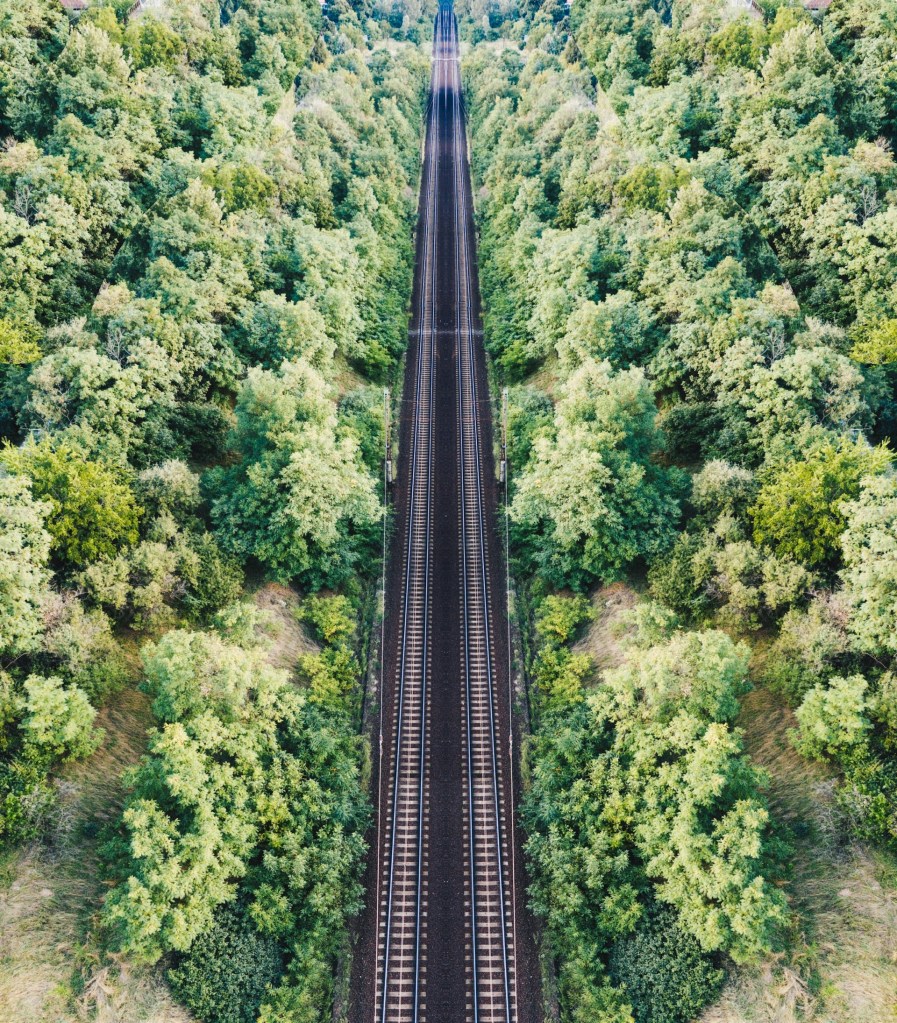
Photo by Bence Balla-Schottner on Unsplash I suppose my main reflection is that I am wondering about the potential walking, cycling and wheeling arrangements in the planned city. Okay I realise in this case it is in the middle of a desert so the climate is probably against you (!), but aside from that would life feel a bit metronomic and somewhat restrictive travelling up and down a straight line? Or, would it make getting around feel ultra efficient and easy?
We will have to wait to see what happens with Neom. In many ways it sounds fascinating, if you focus on the design ambition over the ugly realities of the clearing and construction process, but does it sound enticing to live along a car-free line? I thought that I was going to feel really excited about the prospect of life in a imagined car-free city, but then life-on-the-line does not feel so car-free-ing. I wonder if you’ll even be allowed to take your bike on the train?
-
Life behind glass
When you are car-free you forget about what travelling around is like for people who do not have their car-free-dom – in the UK it is suggested to be about 17 million households are car-free. Last post I wrote about my weekend ‘with van’ (we hired/rented one for a couple of days) – and it is amazing how much moving around by motor vehicle changes your experience of travelling and being alive.
As a child we pretty much always went by car. It was like a bodily reflex, you walked out of the front door of your house and got into the car. In total, like many children in the UK, I must have cumulatively spent weeks, possibly even months in a car. It is suggested the British adults drive 285,012 miles in their life time!
When you are travelling in a car you are in an enclosed space – perhaps unless if you have a convertible and the weather is good with the roof down. Being in that private enclosed box – your car – your perception of the world changes. Well mine does anyway, it happened on that weekend with the van – it’s like the rest of world becomes some indistinct backdrop that you are not really part of.
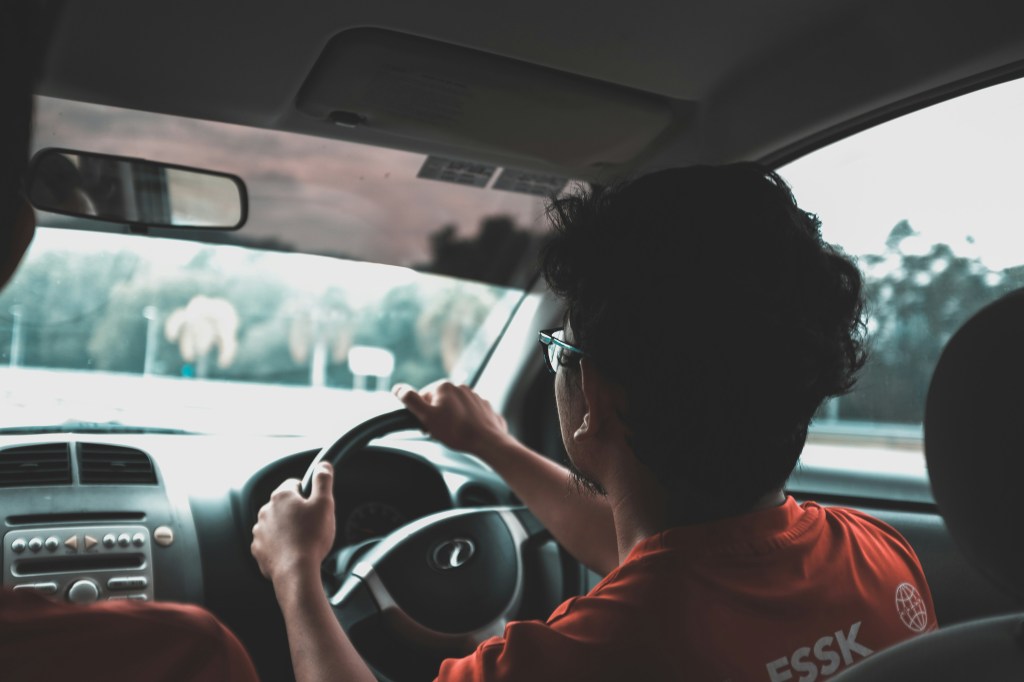
Photo by Hareez Hussaini on Unsplash I feel detached and abstracted from the rest of the world in a car. You are not feeling the movement of air on your skin or any physical sense of effort to get from one place to another. You may well have the air conditioning and stereo on sat in your room on wheels – so you have your senses full occupied with those.
You might say it’s the same detachment if you are sat on a bus or train, but I think it is different. You need to get to those modes of transport, probably by walking or cycling to the bus stop or station. This means that you have felt and breathed more of the world enroute (although perhaps not ideal if there are a lot of fumes from traffic!) than just briefly walking down your drive, or crossing the road outside your house, to get into your car.
On a bus or train you are also not encased in some private space, but you are in proximity to others, and so able to directly sense more of the world around you which is not just in the interior of your car. Of course at times there are aspects of the world, and the people in it, that you might well have been happy to not have encountered on the train or bus!
You miss a lot in a car. I think life behind a windscreen/windshield dulls your sense of connection to the places that you are travelling through and between. Instead of being places of intrigue to explore as you move through them on your journeys, they become an inconvenient backdrop of interruptions to navigate past as quickly as possible.
-
A weekend with van
We had been planning it for a while. There were a few jobs that we needed to do that required some ‘extra’ support. Mainly a visit to our local DIY shop, for a load of garden stuff (compost etc.), and to take some accumulated things (mainly defunct electrical goods) to the recycling centre.
We’ve done a few vehicle hires/rentals over recent years – mainly in Covid-times when visiting older family as part of trying to protect them from taking any viruses with us. At that time picking up Covid whilst on public transport enroute was a risk that vehicle hire/rental meant we could try to minimise.
I do feel quite compromised when getting motor-powered vehicle support. But it doesn’t mean that we are not car-free anymore, just that we are with the hire/rental company car (or in this case a van), for some days.
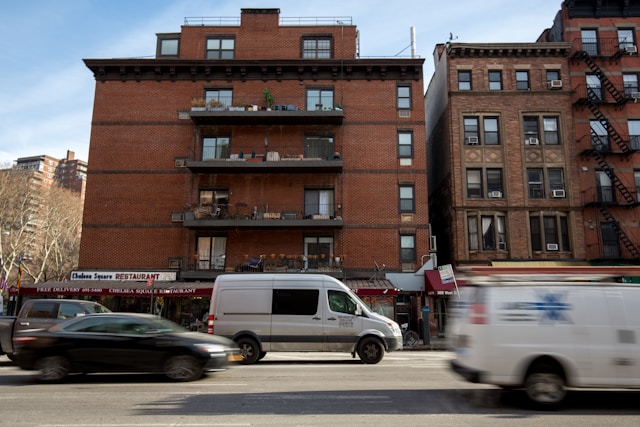
Photo by Jason Leung on Unsplash Overall, being ‘with van’ was not an enjoyable experience. It is really pretty stressful trying to get a vehicle around a city, maybe a van which is a bit bigger than your average car makes it more challenging with manouvering and parking. Also, the lack of a rear view mirror probably does not help.
My experience is a far cry from the romantic images of driving a van that you get when you search ‘van’ on Unsplash for an image to use above (like I just did). In those images it is all desolate roads and pristine nature, and mostly shots of camper vans.
We did accomplish the missions (including DIY shop and recycling centre) that we sought the van’s help for. However, I felt drained from it – for sure that is partly down to a lack of any recent driving experience – but it really is miserable trying to get around a city in vehicle. Dodging all the other motor vehicles on the roads, and trying not to make a wrong turn.
Sat. nav. might be suggested to make moving around in a motor vehicle all really easy and straight-forward, but I found if far from enjoyable. Certainly a world away from all those ads which suggest using motor vehicles is so liberating and freeing! Returning the van was such a relief. It’s back at the hire/rental company now – phew!
-
How much??
I was wondering the other day how much money we avoid spending by being a car-free family versus the average car-owning family. From a bit of web-searching I found a suggestion that the average annual cost of running a car in the UK is £3,580. Another source suggested £3,552.
What is quite surprising is the array of costs that are associated with keeping a car going – fuel, insurance, repairs etc. And, when you start to think about the potential variability of fueling, insuring and repairing/servicing your car I can well imagine many peoples’ car costs are well above that amount.
Then there is the cost of buying your vehicle with quite a bamboozling array of purchase/financing options that I fortunately have little knowledge of because I haven’t ever lost my car-free-dom. Again depending on what you are looking for from your car it must vary a lot. Some research by Kwik-Fit suggested that average monthly car finance payment, allowing for depreciation, is approximately £226.
I am assuming that like many of the costs in our cost of living crisis car-costs are only on the up-and-up, so what are reliable current numbers I am not sure. However, from this bit of searching around it is fair to say that even what some might see as a ‘modest motor’ is definitely not going to go unnoticed from your living costs! Particularly, if you are not earning much more than the median UK household disposable income of somewhere around £32,000.

Photo by Christopher Bill on Unsplash We’ve never totalled up our travel costs over the year to make any solid financial costs comparisons, but it is fair to say that – even on over priced UK public transportation – you get a lot of bus journeys for the money you will drain on a keeping your motor running.
In car-free-dom not only do you not have the financial stress of keeping a car going, you also don’t have those worries about something, or somebody, potentially going awry with your money hungry car companion. Phew!
-
A non-car
One thing that I particularly enjoy about car-freedom is that because we don’t ever have a car sat outside our presence at home is not clearly marked. Some research suggested that the average car in Britain spends 23 hours a day parked, of which almost three quarters it is parked outside the owner’s house. Although some people could hide their car(s) away in a garage, if they have one.

Photo by Chris Mok || @cr.mok on Unsplash I suppose people probably don’t care if we are home or not, but I like the lack of wheeled-metal-box marker if anybody did want to keep track of our (non)presence. Particularly, as we often do notice the comings and going of neighbours associated with when their car(s) appear and disappear.
Of course the non-car also changes the pattern of how you interact with the world. By not getting out of a big-brick-box (your house) straight into a wheeled-metal-box (your car) means that you actually-physically hit the streets without being encased in some kind of protective box.
When you move around in car-freedom you can actually meet other people also on the move and can stop for a chat if your want. You can take more time to notice your surrounds, feel the air in your lungs and recognise what it feels like to be sensorially emersed in your changing locale.
That might not necessarily be good news depending on how you feel about your neighbourhood, but you can make friends being on the street rather then stuck inside a vehicle. Over the years we’ve interacted with loads of people also moving around, and started some lasting friendships, so it makes us feel less detached and disconnected from ‘outside’. Even if the occasional encounter might not end up all that positive.
Being a car-free-family, walking about our neighbourhood to get to the shops, pub or heading out on a longer walk from home we really get to know our surrounds – how the local landscape fits together. We find a lot of satisfaction, comfort and freedom in that.
-
On yer bike..
Cycling is in our car-free-dom mix of travelling options. Including, bikes that fold, tour, carry two-people and can pull-a-trailer. We’ve done a fair bit of cycling over the years.
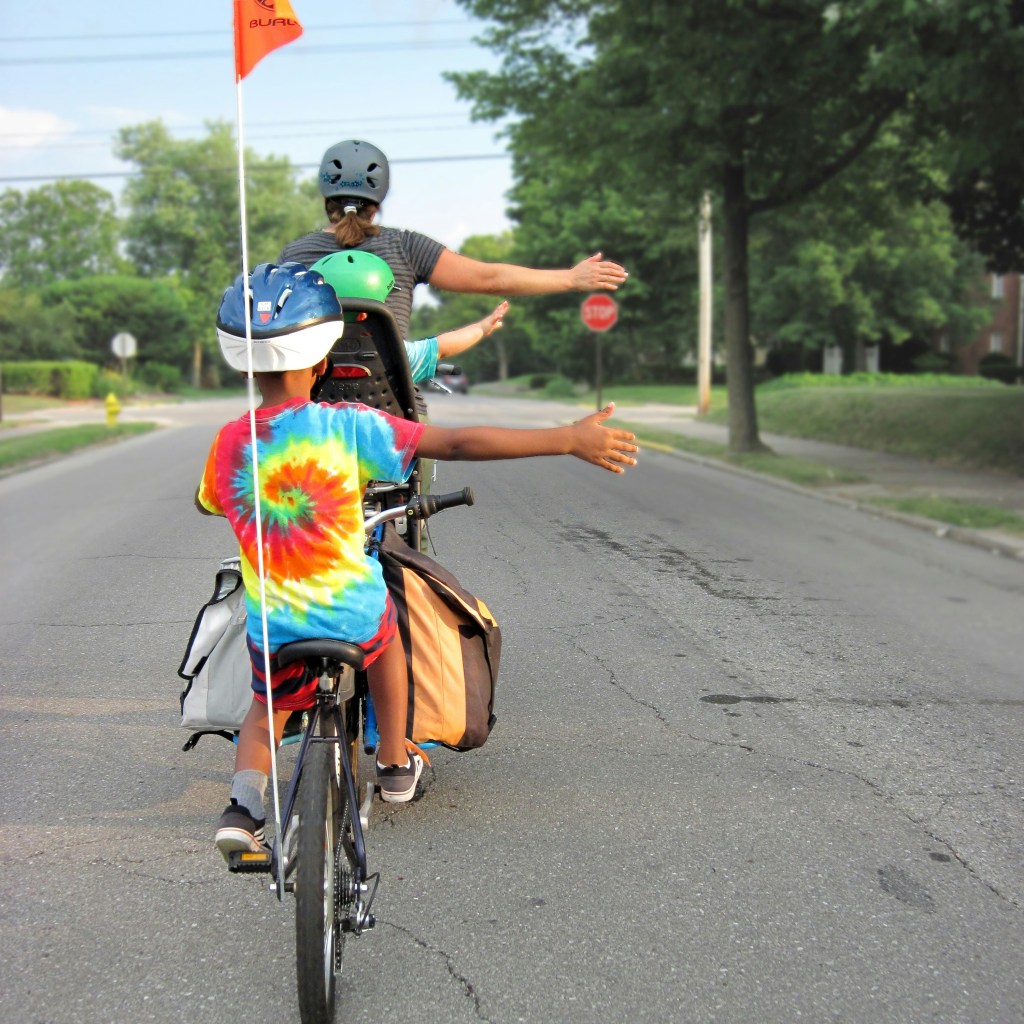
Photo by Mark Stosberg on Unsplash Cycling is wonderful when you have space to peddle around free from the worry, noise and smell associated with cars and other vehicles. However, in a city, or almost anywhere in the UK, you can’t really get away from the worry, noise and smell of cars and other vehicles.
What that unescapable reality means is that although getting from A-to-B, when it is too far to walk, the bus doesn’t go that way, or you need to get somewhere more quicky, it definitely makes sense to reach for a bike. But, and it is a BIG but, most of the time I don’t find it a relaxing way to move around. Indeed, close encounters with cars and other vehicles do the quite the opposite.
The potential vulnerability felt on a bike when the ever-expanding size of cars on the road get too close can really get under my skin, and makes me feel so annoyed that I get so angry about being annoyed, particularly when I am supposed to be chilling out ‘en bicyclette’ (as they would say in France). And, when you can’t be heard over the traffic noise by whoever you might be cycling with it does get a bit dispirating.
There are some gradual improvements to making space for cycling in our city, Sheffield, and any off-road cycle paths are a major step in the right direction. As well as ‘Active Neighbourhoods‘ (where people movement is prioritised over car movement) giving some glimmers of hope.
That said, our enthusiam to reach for the bike has diminished in recent times – it just takes one nutter of a driver to make a ride turn sour, particularly if you are out with your child. That, and the many hills in Sheffield, certainly add to the challenge of peddling around! E-bikes are increasingly popular around the city.
Sorry it’s feeling a bit downbeat this post on cycling, but I am just trying to paint a picture of the highs and lows of car-free-dom. Don’t get me wrong, there is no way on earth I am about to buy a car! However, trying to deal with the challenges of ‘alternative’ modes of transport in the face of car-centrism is a reality that can’t be ignored. Taking deep breaths to try to stay calm, particularly if you are peddling up hill(!), is often the only realistic option!
-
What happens if the bus doesn’t show?
Last post I got into how we need to plan our movements a bit more in our car-free-dom because of needing to coincide with transport (i.e. most likely buses and trains). Things happen – strange weather again!! We always find it amusing that if there is some challenging weather and things get disrupted on the news in the UK they don’t go on about the limitless number of inevitable disruptions to car travelling, it is remarkably that we need to fixate on the headline that ‘some trains got delayed’!
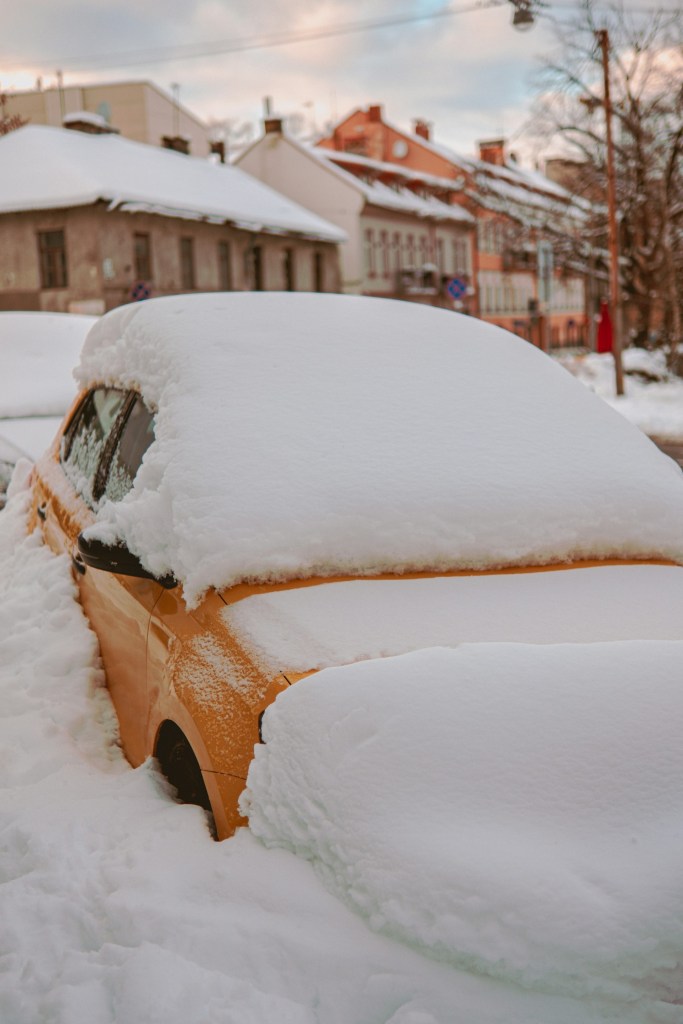
Photo by Tom Dick on Unsplash We have taken a lot of trains in the UK and I can’t deny we have had some delays, perhaps even the occasional cancellation. However, even with our oddly marketised, incredibly over-complicated and woefully under-invested in train system (that is aside from the money pit of the HS2 vanity project!) it has kind of works for us pretty OK most of the time. We get to where we intended most of the time, and often at the expected time! We’ve clearly been lucky enough to avoid one of those train ‘ordeals‘ (sorry if you haven’t) that also travel so quickly into the headlines.
I digress – I started on a thread about missing the bus with this post. As I mentioned before we get the bus out of Sheffield, the city where we live, to go walking in the Peak District a fair amount. In doing so you are in the hands of a few bus routes and associated bus companies (we have spent quite a few hours staring at maps to try to get a grip on the main bus routes). The buses are once an hour, at best, and so it does open up the question of: What happens if the bus does not show?
We had the bus no show situation a few weeks back. If you are in the middle of nowhere then it could be a real problem. But as with the last post you do need to have a back up plan as it can happen, and if you are with kids they are not so good at working with your uncertain response to their question: Will we ever get home? So you do need to think about back up options, particularly in the winter when you could freeze yourself waiting.
So the bus didn’t come, but where we finished our walk (the beauty of public transport being that you can do point-to-point walks as you don’t have to reunite with your demandingly expectant automobile) we sussed out that there were other bus routes, even a possible train option, and most importantly a decent cafe. We did swear a bit, and get upset but then we could go and have a hot drink and cake in the cafe and it was fine – you might even say the serendipity added to the experience! And, when you get back home there is not really going to be any time to cook so it has to be chips from the local chip shop – what is not to like!
It’s not ideal the no show bus scenario. I did email the company and several weeks later got an email back, which was a bit underwhelming, although they did say ‘sorry’. It was due to them having ‘issues with available buses due to safety critical defects’ – which I suppose in itself is a bit concerning! Anyway the no show can happen (we’ve even made some spectacular misreadings of bus timetables!) so I am just saying be ready for it as even with all the social media, bus tracking, smart-apping and whatever else in the world you have access to (unless you are so remote you have no phone signal!) they can’t magic up a replacement bus, as far as I am aware!
-
Still car-free..
I thought that I would not have run out of steam so early, but it has been a while since I last came up with a post! Of course nobody reads this but it is at the very least therapeutic to type up a post about being car-free in all its opportunities and challenges.
If you do a bit of web searching like I have about car-free typically the posture of the communication is that everything about being car-free is great and so we all need to do it tomorrow (e.g.)! For sure we should, it would be wonderful, but it is not without its personal challenges.
Beyond being immersed in places designed for cars and the hefty promotion of them in many of the ads that we encounter day-to-day, and questionning how much control we have over our lives, being car-free does probably require more planning.
Planning is required in all forms of living to at least some degree but sustaining car-free-dom probably comes with more demands than some other ‘lifestyle choices’ driven by convenience. In many ways the car is the ultimate response to the situation of ‘oh damn I forgot something at the shops and I really need it now’. Queue ‘brum brum’ noises and off we pop for one of those 61% of car trips that are under 5 miles to ‘fix the glitch’ (i.e. get what we forgot ASAP).
So for example, taking public transport as your alternative will require coinciding with it, likely the bus. If you have good frequent and reliable bus services, lucky you, but if you don’t you need to get organised ahead of time to plan your schedule as well as a back-up plan. Possibly you might need multiple stages and different means of transport for the different parts of your journey.
Although, of course walking, to the shop as with the ‘oh damn it’ scenario, generally doesn’t require any planning – although it helps to check the weather. Just as with cycling as long as you have somewhere to safely store your bike that is accessible and the bike is in good health to jump on at a moments notice.
So it varies. But when we are, for example, heading out on the bus on a weekend morning to get out of the city for a days rural wandering the bus is at best once an hour and we need to get organised to meet it, fed and with all our kit and food for the day. Sounds simple but does require a bit of planning although we have honed preparations over time.
Anyway, my general point here is that even with all the route planning guidance on Earth (Traveline, Bus tracking, Google directions etc.) in your car-free-dom using a public-means of transport requires thinking ahead. I mean my goodness to get the best train ticket prices in the UK you’re generally looking about 12 weeks ahead! So all in all you can’t Zen out too much in all your car-free-dom as you’ll probably miss the bus!

Photo by Belinda Fewings on Unsplash
-
The War on Cars!
In this blog an intention was to review some of the websites and blogs already out there about being car-free. There are a few and some are really helpful and interesting – so I still do need to do it sometime. However, I recently found my way to a podcast which seems to have become pretty popular and notable – The War on Cars. This is what they say about their podcast on their site:
“The War on Cars is a new podcast about the epic, hundred years’ war between The Car and The City. We deliver news and commentary on the latest developments in the worldwide fight to undo a century’s worth of damage wrought by the automobile. We produce a new show every other week.”
I have listened to a few of their recent podcasts – the first ones seem to go back to August 2022. The first reflection is that doing this blogging thing is very likely – “just so last year!”. What I mean by that is in the short history of the internet as I understand it social media in its various forms has superceeded blogging. And, video and audio media has become the go-to choice for those who want to get their messages out via the internet.
Where as this blog is ‘old school’ text and photos – The War on Cars is a podcast (not much video as far as I have noticed so far) and a very good one! The production and editing it very neatly done. And, whilst from the title it sounds quite militant (literally) there is for sure a strong, let us say, ‘active’ and ‘public’ travel advocacy, it seeks to open up conversations about cars, and getting rid of many of them, with all kinds of folks including those who are obsessed with their motor car. For example, today I listened to an episode engaging with people who were all about their, likely the fiercest of all vehicles, ‘muscle cars‘.
The main revelation of listening to The War on Cars is that a lot of people are having very interesting and serious conversations about car-free cities and ways of living – it sounds very promising. Even when for many it seems unimaginable (see last blog post) that we can envisage existing without cars. Indeed the first car appeared on Britain’s roads in 1895, whereas the first humans are suggested to have been in Britain about 500’000 years ago. So we have been without cars for 99+% of human history in the UK. In historical terms cars are very certainly odd!

Photo by British Library on Unsplash
-
How did you get here?
Being a car-free family is not some fad for us. As written about in the first entry to this blog we have never owned a car. Of all the things that we have done to try to pay attention to the impacts and feedback related to what we eat, the energy we use and how we get around, not owning a car has been the thing that has prompted the most puzzled or annoyed responses.
During the Covid-19 pandemic to visit family we did hire a car now and then as we didn’t want to potentially spread the virus to (older) family members who were more vulnerable to severe illness. Traveling by car, or more specifically driving one, was an awful experience. Used to sitting on the train playing games or reading a book we found ourselves stressed and tired-out from traveling by car. Also, we just simply did not feel good (let’s call it ‘a bit yucky’) when we finally arrived at our destination. And, even worst we had these nagging concerns of ‘Will the car be alright?’ and ‘Do you think it is safe to leave it parked here?’.
So to us not owning a car is a pretty pragmatic choice on comfort, cost and climate grounds. Which makes it ever so intriguing how people can be so astonished that we manage to get somewhere – without a car! Hence the title of this entry ‘How did you get here?’.
Recently we went to a cross-country running event on a Saturday morning on the other-side of the city at which our daughter competes. We were asked (no less than!) three times by puzzled looking parents whose kids where also running – ‘How did you get here?’. It was like we had landed on the moon without a spaceship! I could barely hold back the laughter (I did, until later) as it was such an, I am sorry to be critical, stupid question! In this case we got the bus there (we might have also cycled) – which seemed surprisingly revolutionary and incomprehensible to those how could not imagine what getting there car-free could possibly entail. We even got, and I have to say not unusual, kindly pitying offers of “Well next time we can give you a lift”!
Photo by Mitchell Johnson on Unsplash
There is a lot to unpick here with these (I have to say) regular reactions to the impossibility of being a car-free family. To us being so is rather dull and unremarkable really, but to many others it seems unimaginable. As I wrote in the previous entry, in the UK and based on some statistics that in 2020 17 million households owned no cars – so we are not alone, its quite common really! As we carry on with this blog we will try to explore these reactions to car-free-ness a bit more and also attempt to help others who are (trying to be) a car-free family. Particularly, as some commentators are suggesting – probably rather optimistically – we might be peak car.
-
Subscribe
Subscribed
Have a WordPress.com account? Log in now.

